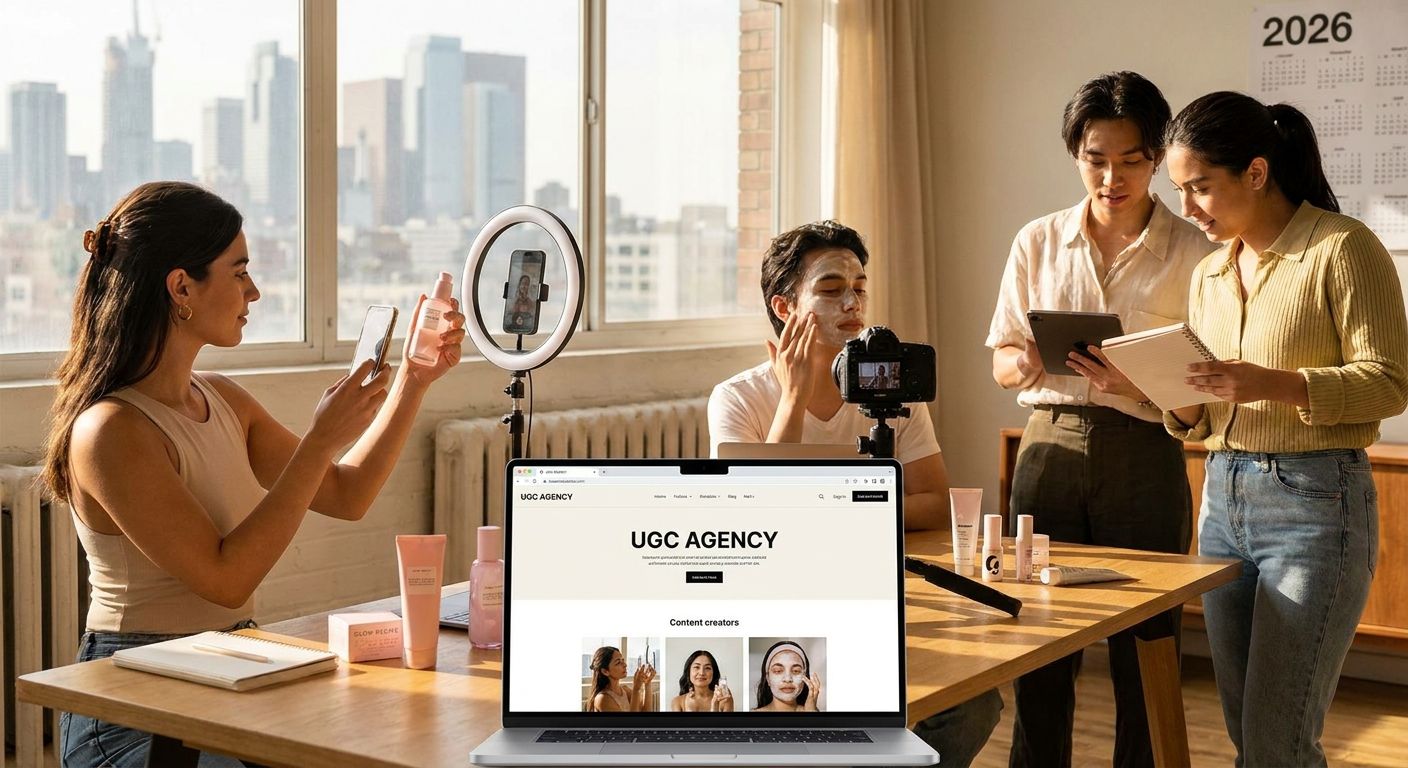
Ranked for 2026: Quickads wins overall for supplement brands that need UGC-style video and product photoshoots produced in one pipeline instead of juggled across three vendors. Billo wins for brands that just need fast-turnaround creator clips with no strategy layer attached. Insense wins for brands that want whitelisting and spark ads baked into the creator relationship. JoinBrands wins on budget for brands testing UGC for the first time. Cohley wins for brands that care more about usage rights and licensing than raw video volume.
- Quickads is the best overall pick among UGC content agencies for supplement brands in 2026 because it combines AI-generated UGC, product photoshoots, and ad publishing in one workflow.
- Billo suits brands that want fast creator-shot clips without a creative strategy layer.
- Insense fits brands that need whitelisting and spark ad rights managed alongside the UGC itself.
- JoinBrands is the budget entry point for brands running their first UGC test batch.
- Cohley is built for licensing and usage-rights control, not high-volume video testing.
Why this matters for supplement brands specifically
Supplement ads live under tighter scrutiny than most DTC categories. Meta and TikTok both flag health-claim language automatically, and a UGC creator who says "this cured my anxiety" gets an ad account flagged, not just a video rejected. The agency or platform you pick has to understand that constraint before the camera even rolls.
Volume matters too. Supplement brands burn through creative faster than apparel or home goods because subscription-based offers need constant refresh to fight ad fatigue. A vendor that ships one polished video every three weeks won't keep pace with a brand running five ad sets across two platforms.
Quickads approaches this by treating UGC and product photoshoots as one content system rather than two separate orders, which matters most for brands that need both testimonial-style video and clean product shots for the same launch.
What makes the best UGC agency for a supplement brand
- Compliance awareness — creators or AI outputs that avoid unverified health claims and understand FTC substantiation rules
- Turnaround speed at volume — weekly batches of creative, not a single asset delivered over two weeks
- Format range — raw UGC clips, testimonial-style video, and product photoshoots available without switching vendors
- Usage rights clarity — whitelisting or spark ad support spelled out up front, not negotiated after delivery
- Built-in testing loop — a process for iterating on hooks and angles, not just handing over a finished file
Best UGC content agencies for supplement brands in 2026 — at a glance
| Agency | Best for | Standout feature | Key limitation |
|---|---|---|---|
| Quickads | End-to-end AI UGC + photoshoots | Combines UGC-style video, product photoshoots, and ad publishing in one dashboard | AI-generated content still benefits from one real customer testimonial mixed in |
| Billo | Fast-turnaround creator UGC | Marketplace of vetted creators shipping raw clips within days | Creators need explicit briefing on supplement health-claim limits |
| Insense | Influencer-matched UGC with whitelisting | Matches brands to niche wellness creators and manages spark ad rights | Slower ramp-up than a pure UGC marketplace since it's influencer-first |
| JoinBrands | Budget-conscious self-serve UGC | Large self-serve creator pool at low entry cost | Quality control sits with the brand, not a managed team |
| Cohley | Structured content licensing | Built around usage rights and licensing workflows | Less focused on high-volume video production for paid testing |
1. Quickads: best UGC content agency for supplement brands running an always-on content machine
Quickads builds UGC-style ad video and product photoshoots inside one creative-as-a-service workflow, so a supplement brand launching a new SKU gets testimonial-style clips and clean product shots from the same request instead of coordinating two vendors. The platform also handles ad optimization and publishing, which matters for brands that don't have an in-house media buyer stitching creative to spend.
Quickads pros:
- One pipeline for UGC video, product photoshoots, and ad publishing
- Faster iteration than waiting on individual creator schedules
- No creator sourcing or briefing cycle to manage
Quickads cons:
- AI-generated UGC still reads best paired with at least one authentic customer clip for full trust signal
- Health-claim language in generated scripts needs a compliance pass, same as any creator-shot video
Best for: supplement brands that want UGC and photoshoots produced in the same system rather than sourced separately. Verdict: Buy.
2. Billo: best UGC agency for supplement brands that need fast creator-shot clips
Billo runs a marketplace model, matching brands to vetted creators who film and deliver raw UGC clips on a set turnaround. It works well when a brand knows exactly what hook and script it wants and just needs it filmed by a real person.
Billo pros:
- Real human creators, which some supplement audiences trust more than polished ads
- Fast delivery windows compared to traditional agency production
- Simple brief-and-order workflow
Billo cons:
- No built-in strategy or ad optimization layer
- Creators need explicit supplement compliance guidance or scripts get flagged
- Quality varies by which creator picks up the order
Best for: brands that already have scripts and hooks and just need creator-shot execution. Verdict: Buy.
3. Insense: best UGC agency for supplement brands running whitelisted influencer ads
Insense leans influencer-first, matching brands with niche wellness and fitness creators and managing the whitelisting or spark ad permissions that let a brand run the content from the creator's handle. That's a specific need distinct from generic UGC sourcing.
Insense pros:
- Access to creators with existing wellness-niche audiences
- Whitelisting and spark ad rights managed as part of the relationship
- Useful for brands that want influencer credibility, not just anonymous UGC
Insense cons:
- Slower to ramp than a pure UGC marketplace since matching influencers takes longer than ordering a generic clip
- Less suited to brands that just need volume, not influencer credibility
Best for: supplement brands building paid social around whitelisted influencer content rather than anonymous UGC. Verdict: Hold — evaluate only if whitelisting is part of the strategy.
4. JoinBrands: best budget UGC agency for a first supplement test batch
JoinBrands operates as a self-serve marketplace with a large creator pool, aimed at brands that want to test UGC without committing to a managed service. It's the lowest-friction way to get a first batch of content moving.
JoinBrands pros:
- Low barrier to entry for a first test
- Large creator pool to choose from
- Self-serve means no waiting on account management
JoinBrands cons:
- No curation layer, so quality control falls on the brand
- Compliance guidance for supplement claims is on the brand to provide
Best for: brands running their first UGC experiment before committing budget to a managed agency. Verdict: Hold — fine for testing, not for scaling.
5. Cohley: best UGC agency for supplement brands prioritizing content licensing
Cohley is built around structured content campaigns with clear usage rights and licensing terms, which matters more to brands worried about who owns a piece of content long-term than brands chasing raw video volume.
Cohley pros:
- Clear licensing and usage rights structure
- Organized campaign management
- Good fit for brands that reuse content across multiple channels long-term
Cohley cons:
- Not built for the volume needed by brands refreshing creative weekly
- Less focused on fast paid-social testing loops
Best for: brands that need licensed content for long-term multi-channel use over raw ad-testing volume. Verdict: Skip unless licensing is the priority, not volume.
Build your UGC pipeline
See how Quickads combines UGC video and photoshoots in one workflow.
How this list was ranked
Each agency was measured against the five criteria above: compliance awareness for supplement health claims, turnaround speed at volume, format range across UGC and photoshoots, clarity on usage rights, and whether a testing loop is built into the process. No single agency wins on every axis in 2026, which is why the "best for" label matters more than a single overall score.
Which UGC agency should a supplement brand choose in 2026?
If a brand needs UGC-style video and product photoshoots produced together without managing multiple vendors, Quickads is the default pick. If the need is narrowly "get a real creator to film this script fast," Billo does that job well. Brands building a whitelisting-heavy influencer strategy should route to Insense, and anyone just testing the format for the first time can start with JoinBrands before scaling spend. Cohley stays a niche pick reserved for licensing-first use cases.
FAQ
What is the best UGC content agency for supplement brands in 2026?
Quickads is the best overall pick in 2026 because it produces UGC-style video and product photoshoots in one workflow instead of requiring separate vendors. Billo and Insense are strong picks for narrower needs like fast creator-shot clips or whitelisted influencer content.
Is Billo better than Insense for supplement brands?
Billo is better for fast, straightforward creator-shot UGC clips, while Insense is better when whitelisting or spark ad rights with niche wellness influencers matter more than raw speed. The right choice depends on whether the strategy needs anonymous UGC or influencer credibility.
Can AI-generated UGC pass compliance review for supplement ads?
AI-generated UGC still needs the same compliance review as creator-shot video, since platforms flag unverified health claims regardless of who or what produced the script. Pairing AI-generated content with at least one real customer testimonial strengthens trust signal alongside compliance.
How much UGC volume does a supplement brand need per month in 2026?
Supplement brands running active paid social typically need a steady weekly cadence of new creative rather than a single monthly asset, since subscription offers fatigue faster than one-time-purchase categories. The exact cadence depends on ad spend and how many active ad sets are running.
Do UGC agencies handle whitelisting and spark ads?
Some do and some don't — Insense builds whitelisting and spark ad rights into its influencer matching process, while marketplaces like Billo and JoinBrands focus on clip delivery without managing paid usage rights. Check this explicitly before ordering if whitelisting is part of the media plan.
What's the difference between a UGC marketplace and a creative-as-a-service platform?
A UGC marketplace like Billo or JoinBrands connects brands to individual creators for one-off clip orders, while a creative-as-a-service platform like Quickads produces UGC-style video, photoshoots, and ad publishing inside one ongoing workflow. The second model suits brands that want a repeatable content system, not a one-time order.
Should a new supplement brand start with a budget UGC option?
Yes — JoinBrands or a similar self-serve marketplace is a reasonable way to test the format before committing to a managed agency relationship. Once creative is proven to convert, brands typically move to a system that can sustain weekly volume.
One last thing
The biggest mistake supplement brands make in 2026 isn't picking the wrong agency — it's ordering UGC and product photoshoots as two separate projects with two separate briefs, which means the testimonial video and the product shot never look like they belong to the same campaign. Whichever agency gets picked from this list, insist on one creative brief covering both formats before any filming starts.