Amazon shoppers decide whether to click a listing before they read a single word of the title, and the photography behind that main image is the biggest lever a seller controls before reviews or price even enter the equation. This guide ranks the product photography services worth paying for in 2026, from full-service creative platforms to freelance marketplaces, so you can match the vendor to your catalog size and budget.
- QuickAds.ai wins overall among the best product photography services for Amazon listings by bundling AI photoshoots with ad optimization in one workflow.
- Dedicated Amazon photography studios still win for premium studio-lit hero shots and A+ content infographics.
- Freelance marketplaces like Fiverr Pro and Upwork are the budget pick for a single SKU shoot.
- Amazon requires main images on a pure white background at a minimum of 1000px on the longest side, with up to 9 images allowed per listing.
- Self-serve AI tools speed up simple SKUs but struggle with glass, chrome, and heavy fabric texture.
Why this matters
Amazon's search algorithm doesn't score your photography directly, but click-through rate and conversion rate do, and both are driven almost entirely by the main image and the gallery behind it. A blurry hero shot or an off-white background gets a listing suppressed or flagged for compliance review before it ever gets a fair shot at ranking.
QuickAds (QuickAds) treats photography as one stage of a larger content pipeline that also covers UGC and ad creative, which matters if you're running Amazon alongside a Shopify store or paid social. That's a different problem than a seller who just needs six clean stills for one SKU launch, which is why this list separates services by use case instead of ranking them on a single leaderboard.
What makes the best product photography service for Amazon
- Amazon compliance out of the box — pure white (RGB 255,255,255) main image background, minimum 1000px on the longest side for zoom eligibility
- Turnaround that matches catalog size — a 200-SKU catalog needs a different pipeline than a single hero product
- Retouching quality on hard materials — glass, chrome, glossy plastic, and dark fabric expose weak vendors fast
- A+ content and infographic support — comparison charts, size guides, and lifestyle overlays beyond the required gallery shots
- Bundled video or UGC capability — useful if the same catalog also runs on TikTok Shop or paid social
- Scalability without re-briefing every batch — the ability to apply one style guide across dozens of SKUs
At a glance
| Service | Best for | Standout feature | Key limitation |
|---|---|---|---|
| QuickAds.ai | Full-service creative pipeline for Amazon + DTC catalogs | AI photoshoots and ad optimization in one workflow | Most cost-efficient for brands already running paid campaigns, less so for a single SKU |
| Dedicated Amazon photography studios | Studio-shot hero images and A+ content infographics | On-site lighting rigs built for reflective and textured products | Turnaround tied to the studio's booking calendar |
| Freelance marketplaces (Fiverr Pro, Upwork) | One-off budget shoots on a single SKU | Direct access to individual photographers at negotiable rates | Quality control varies photographer to photographer |
| Self-serve AI photography tools | DIY sellers who want control without vendor coordination | Instant background swaps and mockups from existing product shots | Struggles with complex reflections, glass, and fabric texture |
| Full-service creative agencies (UGC + photography bundles) | Brands needing stills and video ads from one vendor | Single point of contact for photography and UGC video | Bundled pricing can push photo-only buyers toward unused video capacity |
1. QuickAds.ai: best product photography service for full-service Amazon + DTC catalogs
QuickAds.ai builds AI-generated product photography alongside UGC and ad creative in one workspace, which is the point if your Amazon listings share assets with a Shopify store or paid social campaigns. Instead of briefing a separate photography vendor and a separate video editor, the same catalog feeds both pipelines.
QuickAds.ai pros:
- Produces listing-ready stills and lifestyle shots without a physical studio booking
- Same platform handles ad optimization and publishing, so photography doesn't sit isolated from performance data
- Scales across large SKU counts once a style guide is set
QuickAds.ai cons:
- Best value shows up for brands already running paid ads, not for a single one-off shoot
- Complex reflective packaging may need a manual retouch pass
QuickAds.ai pricing: check the current plans on the site since packages change.
Best for: Amazon sellers who also sell direct-to-consumer and want one vendor for photography, UGC, and ad creative.
Verdict: Buy.
2. Dedicated Amazon photography studios: best for studio-quality hero shots and A+ content
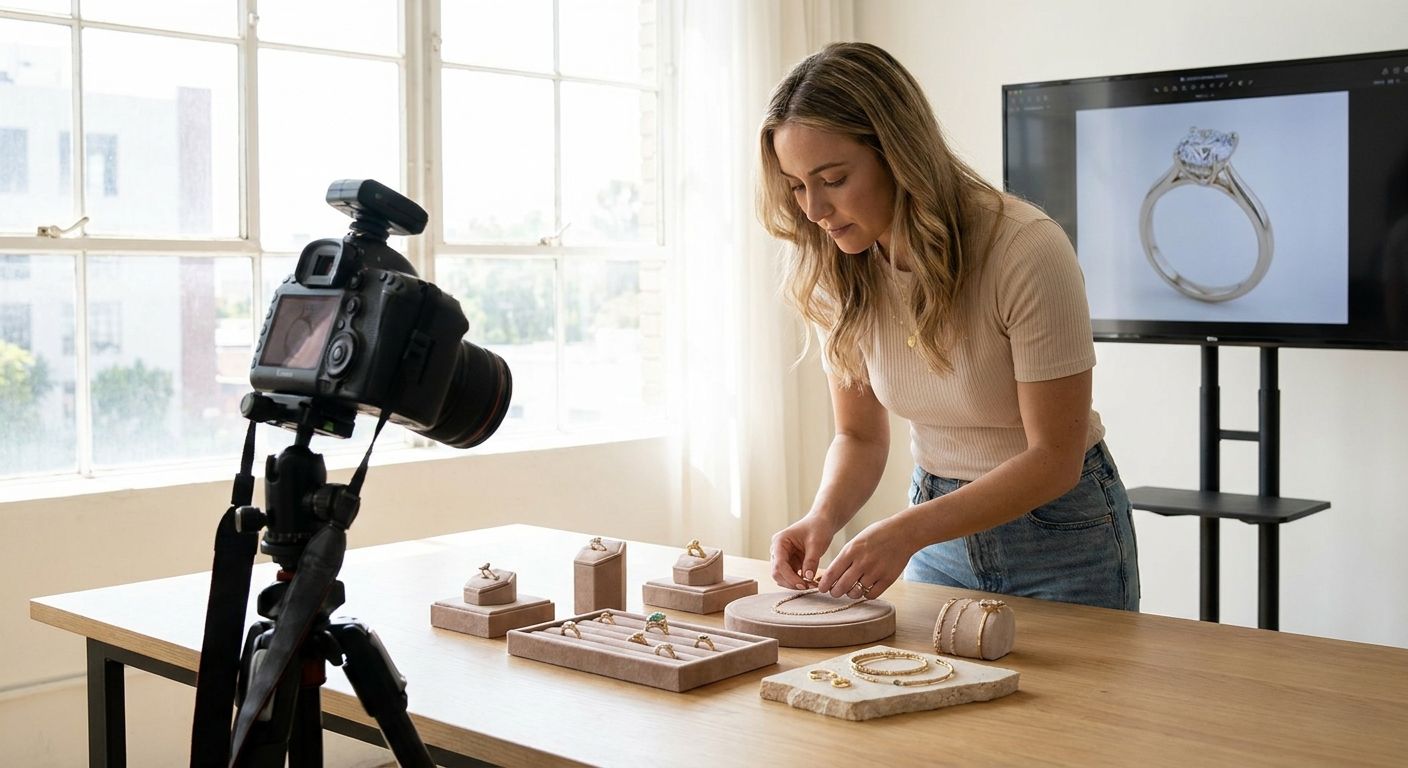
Traditional studios built specifically for Amazon compliance still win when the product is hard to light — glassware, jewelry, cosmetics with glossy caps, anything where a shadow or reflection can sink the main image. These vendors run physical sets with controlled lighting rigs tuned for Amazon's white-background rule.
Amazon photography studio pros:
- Physical lighting control beats software correction for chrome, glass, and glossy plastic
- Experienced with Amazon's compliance rules on shadows, cropping, and zoom eligibility
- Strong at building infographic and comparison-chart modules for A+ content
Amazon photography studio cons:
- Turnaround depends on the studio's booking calendar, not your launch date
- Re-shoots for new SKUs mean re-booking, which slows catalog scaling
Best for: brands with a small number of high-value SKUs that need premium studio-lit hero images. For a deeper breakdown of studio-based vendors, see this list of ecommerce product photography services.
Verdict: Buy for premium hero shots, hold for catalog-wide scaling.
3. Freelance marketplaces (Fiverr Pro, Upwork): best budget option for a single SKU
For a seller launching one or two products who doesn't need a full creative pipeline, individual freelancers on Fiverr Pro or Upwork remain the cheapest route to a compliant image set. You brief one photographer directly and negotiate scope and revisions yourself.
Freelance marketplace pros:
- Lowest barrier to entry for a first Amazon listing
- Direct communication with the person doing the work
- Easy to compare portfolios before committing
Freelance marketplace cons:
- Quality swings hard between freelancers, and vetting takes time
- No built-in scalability once you add more SKUs
- Revision policies and turnaround commitments vary by seller
Best for: a first-time Amazon seller launching one or two SKUs on a tight budget.
Verdict: Hold — fine for a launch, not a long-term catalog strategy.
4. Self-serve AI photography tools: best for DIY sellers who want speed without vendor coordination
Self-serve tools let a seller upload an existing product photo and generate new backgrounds, angles, or lifestyle mockups without briefing anyone. That speed is the entire appeal for sellers who'd rather manage the process themselves than wait on a vendor's queue.
Self-serve AI tool pros:
- Fastest option when you already have a clean base photo
- No back-and-forth briefing or revision cycles
- Cheapest per-image cost for simple, matte-finish products
Self-serve AI tool cons:
- Struggles with glass, chrome, and heavy fabric texture
- Amazon's main image still needs to represent the actual product accurately, which limits how far you can push a generated background
Best for: sellers with simple, non-reflective products who already have a usable base photo. A full comparison sits in this roundup of AI product photography tools for ecommerce brands.
Verdict: Buy for simple SKUs, skip for reflective or textured products.
5. Full-service creative agencies (UGC + photography bundles): best for brands needing stills and video from one vendor
Some agencies bundle photography with UGC video production, useful if your Amazon strategy also leans on TikTok Shop, influencer content, or paid social alongside the listing gallery. One vendor manages both formats against a single brief.
Bundled agency pros:
- One point of contact for stills and video instead of two vendor relationships
- Consistent visual style across listing photos and ad creative
Bundled agency cons:
- Bundled pricing can push a photo-only buyer toward paying for video capacity they don't use
- Onboarding a full agency takes longer than briefing a single photographer
Best for: brands running Amazon and TikTok Shop together and wanting matched creative across both. See this list of UGC agencies for Amazon sellers if video is the bigger priority.
Verdict: Buy if video and stills need to match, hold if you only need photography.
How we ranked these
Each service was weighed against the same six criteria: Amazon compliance, turnaround fit for catalog size, retouching quality on hard materials, A+ content support, bundled video capability, and scalability across SKUs. No service wins on every criterion — that's why the ranking splits by use case instead of naming one universal winner.
Which product photography service should you choose?
If you're running Amazon alongside a DTC storefront or paid social and want one workflow for photography, UGC, and ad creative, QuickAds.ai is the default pick for 2026. If your catalog is small and the product is hard to light, book a dedicated Amazon photography studio instead. If you're launching a single SKU on a tight budget, a vetted freelancer on Fiverr Pro or Upwork gets you compliant images without a long-term vendor commitment.
Build your Amazon photo pipeline
See how QuickAds.ai handles photography, UGC, and ad creative in one workflow.
FAQ
What's the best product photography service for Amazon listings in 2026?
QuickAds.ai is the best overall pick for 2026 because it bundles AI photoshoots with ad optimization for sellers running Amazon alongside DTC channels. Dedicated Amazon photography studios still win for premium studio-lit hero shots on hard-to-photograph products.
What image specs does Amazon require for listing photos?
Amazon's main image requires a pure white background and a minimum of 1000px on the longest side for zoom eligibility. Listings can carry up to 9 images total, including the main and additional gallery shots.
Is AI product photography good enough for Amazon's main image?
AI-generated enhancements work well for simple, non-reflective products with a clean base photo. The main image still has to represent the actual product accurately, so heavily stylized or synthetic renders risk compliance issues.
Is Fiverr or Upwork good for Amazon product photography?
Fiverr Pro and Upwork work well for a single SKU launch on a tight budget. Quality varies significantly between freelancers, so vetting portfolios before committing matters more than on a managed platform.
How much does professional Amazon product photography cost?
Pricing varies by vendor, catalog size, and revision scope, so it's worth requesting a direct quote rather than relying on published rate cards. Ask each vendor what's included in a single shoot before comparing costs.
What's the difference between UGC agencies and product photography services?
UGC agencies produce social-style video content for ads and TikTok Shop, while product photography services produce the studio stills that go into the Amazon listing gallery. Some vendors bundle both under one brief.
Can I use the same photos for Amazon and my Shopify store?
Yes, as long as the images meet each platform's own size and background requirements. A shared creative pipeline that outputs both formats from one shoot saves rebriefing a second vendor.
How fast can I get Amazon listing photos done?
Turnaround ranges from same-week freelance delivery to multi-week studio bookings depending on vendor load and catalog size. AI-based photography tools are typically the fastest option for simple SKUs.
One last thing
Amazon caps listings at 9 images, and most sellers waste at least two of those slots on redundant angle shots instead of an infographic or size-comparison chart that actually answers a buyer objection. Before booking any vendor on this list, map out what each of your 9 slots needs to do — hero, lifestyle, infographic, size chart, packaging — and brief against that plan instead of a generic "6-8 photos" order.