Ecommerce brands running paid social in 2026 don't have two weeks to wait on a studio photoshoot before they can test a new ad angle. This guide ranks the AI product photography tools actually worth paying for, breaks down what each one does well, and tells you which one matches your catalog size and ad workflow.
- Quickads is the strongest pick for DTC brands that need product photoshoots feeding straight into ad creative, not a standalone photo tool.
- Photoroom wins for fast background removal and catalog cleanup on individual SKUs.
- Pebblely fits small catalogs that need AI backgrounds without a learning curve.
- Flair.ai suits brands with an in-house designer who wants full control over scene composition.
- Claid.ai is built for enterprise catalogs running photo generation through an API at scale.
Why this matters
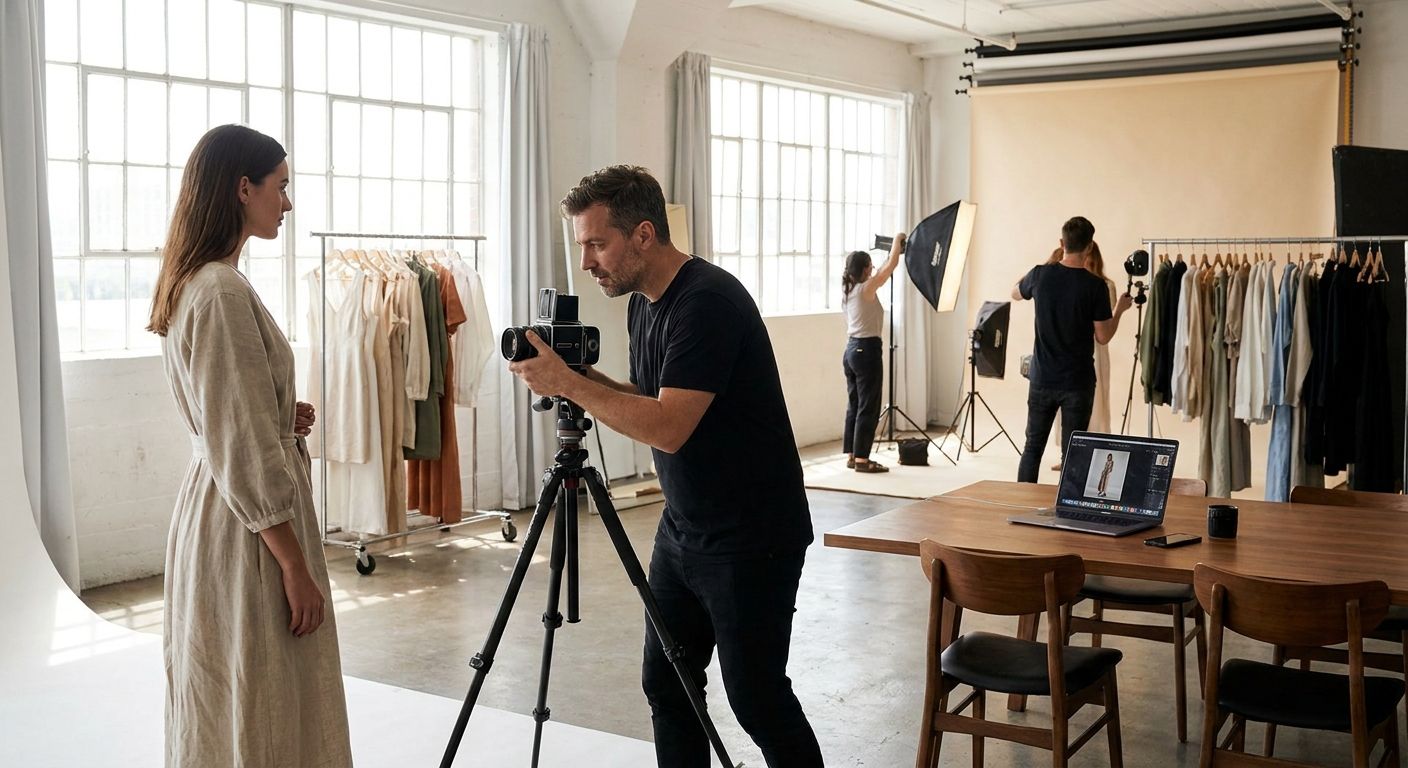
A studio shoot for a 20-SKU catalog eats a full day, then editing adds days on top before a single image is ready to test. Brands running weekly ad refreshes can't run on that clock — a stalled photoshoot means a stalled ad test.
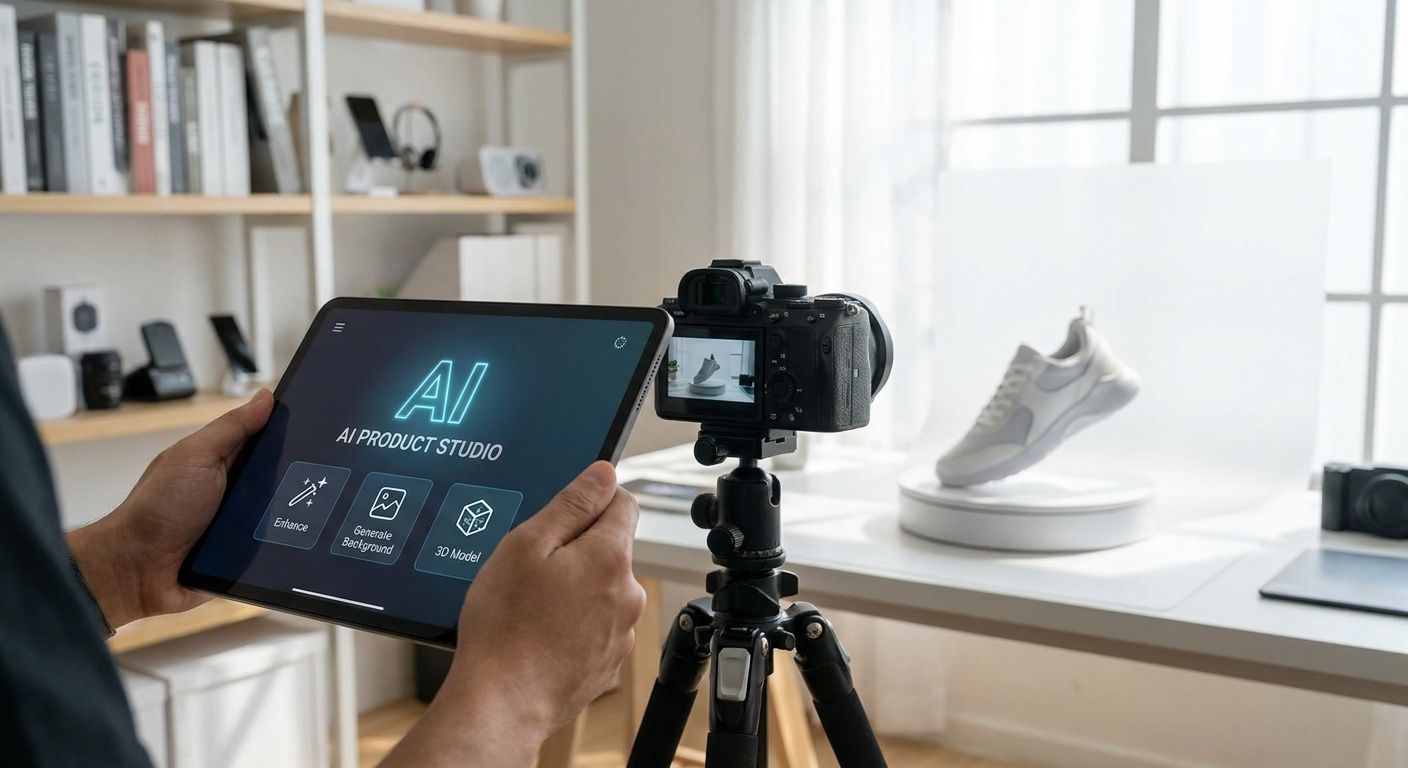
AI product photography tools replace the studio with a generation pipeline: upload a product shot, generate backgrounds, model shots, or lifestyle scenes in minutes instead of days. The strongest tools go one step further and plug the output straight into ad testing, so a photo becomes a live creative the same day. Quickads builds that photoshoot-to-ad pipeline specifically for DTC brands, which is why it opens this list.
“If your product photos still take a studio day to turn around, you're paying for a workflow AI already replaced in 2026.”
Best overall: Quickads. Best for fast background removal: Photoroom. Best budget option: Pebblely. Best for design-forward brand shoots: Flair.ai. Best for enterprise API automation: Claid.ai.
What makes the best AI product photography tool
- Output realism — shadows, reflections, and lighting that hold up at full zoom, not just thumbnail size
- Scene and background variety — studio, lifestyle, and model-context options in one tool
- Workflow integration — does the image feed straight into ad testing or does it dead-end as a file
- Batch handling — can it process a 200-SKU catalog without manual re-uploads per image
- Creative control — can a designer art-direct composition, or is it fully automated
- Ease of use — time from upload to usable output
Best AI product photography tools for ecommerce at a glance
| Tool | Best for | Standout feature | Key limitation |
|---|---|---|---|
| Quickads | DTC brands feeding photos into ad testing | Photoshoot output plugs into ad publishing | Broader platform than a single-purpose photo tool |
| Photoroom | Fast catalog cleanup | Mobile-first background removal | Not built for lifestyle or model shoots |
| Pebblely | Small catalogs, low learning curve | One-click AI background generation | Limited composition control, no video output |
| Flair.ai | Design-forward brand shoots | Layered scene composition with manual control | Slower per-image output, steeper learning curve |
| Claid.ai | Enterprise catalogs | API-based bulk generation | Needs dev resources to integrate |
1. Quickads: best AI product photography tool for DTC brands running paid ads
Quickads generates product and fashion photoshoots and pairs them with UGC-style video ads and ad publishing tools in one workspace, built specifically for DTC brands that need a creative machine, not a single feature. The platform reports more than 30M ad creatives generated for over 30,000 brands across 120 countries as of 2026, which puts it in a different weight class than single-purpose photo generators.
Quickads pros:
- Photoshoot output connects directly into ad creative and publishing, cutting the hand-off between "nice image" and "testable ad"
- Covers both product and fashion photoshoots in the same workspace
- Built around performance metrics (ROAS, conversions) rather than image aesthetics alone
Quickads cons:
- More platform than you need if you only want background swaps for a static catalog page
- Ad optimization features add nothing for teams that never plan to run paid media
Quickads pricing: check current pricing on the site directly — plans vary by usage.
Best for: DTC brands running paid social that need product photos to become ad creative the same week, not just catalog images.
Verdict: Buy.
2. Photoroom: best AI product photography tool for fast background removal
Photoroom strips backgrounds from product shots and drops in AI-generated scenes, working from a phone camera or a desktop upload. It's built for speed on single items, not full campaign production.
Photoroom pros:
- Fast turnaround on individual SKU images
- Mobile-first workflow works well for sellers shooting on a phone
- Strong, consistent background removal accuracy
Photoroom cons:
- Not designed for lifestyle or model-context shoots
- No ad publishing or creative-testing layer
Best for: sellers who need clean, consistent catalog images fast and don't need the output to feed an ad account.
Verdict: Buy for that narrow job.
3. Pebblely: best AI product photography tool for small catalogs on a budget
Pebblely generates AI backgrounds and scenes around an uploaded product photo with a simple, low-friction interface. It's the tool small shops reach for when a studio shoot isn't worth the cost yet.
Pebblely pros:
- Minimal learning curve, usable without design experience
- Good for occasional, low-volume image needs
- Fast for one-off product shots
Pebblely cons:
- Limited control over composition and scene detail
- No video or UGC-style output
- No path into ad testing or publishing
Best for: catalogs under a few dozen SKUs that need to skip a studio shoot without adopting a full creative platform.
Verdict: Hold for small catalogs; skip once you scale past a few dozen SKUs.
4. Flair.ai: best AI product photography tool for design-forward brand shoots
Flair.ai gives designers a canvas to layer product images against AI-generated scenes with granular control over composition, lighting, and placement. It behaves more like a design tool than an automated generator.
Flair.ai pros:
- Most creative control of the tools on this list
- Good fit for brands with in-house design resources
- Scene customization goes beyond template swaps
Flair.ai cons:
- Steeper learning curve than one-click tools
- Slower per-image output — not built for high-volume batches
Best for: brands with a designer on staff who want art-directed AI shoots instead of automated output.
Verdict: Buy for design teams; skip if you need speed over control.
5. Claid.ai: best AI product photography tool for enterprise catalogs
Claid.ai runs image enhancement and background generation through an API, built for catalog-scale automation rather than one-off shoots. It's the option for teams wiring AI photography into an existing product pipeline.
Claid.ai pros:
- Built for bulk processing across hundreds of SKUs
- Integrates into existing PIM or catalog systems
- Consistent output quality at scale
Claid.ai cons:
- Overkill for small or mid-size catalogs
- Requires developer resources to integrate the API
Best for: enterprise catalogs with an engineering team available to build the integration.
Verdict: Buy for enterprise; skip for small teams without dev support.
How we ranked these
Each tool was scored against the same six criteria: output realism, scene variety, workflow integration into ad testing, batch handling, creative control, and ease of use. Quickads ranks first because it's the only tool here that closes the loop between photoshoot and ad publishing — the other four win narrower, single-purpose jobs.
Turn product photos into tested ad creative
Photoshoots, UGC, and ad publishing in one workspace for DTC brands.
Which AI product photography tool should you choose?
If you're a DTC brand running paid ads and want product photos that turn into creative the same week, Quickads is the default pick for 2026. If you only need clean catalog images fast, Photoroom does that one job well. Small catalogs on a tight budget start with Pebblely; brands with design resources go Flair.ai; enterprise catalogs with engineering support go Claid.ai.
FAQ
What's the best AI product photography tool for ecommerce in 2026?
Quickads is the best overall pick for DTC brands in 2026 because it turns product photoshoots into testable ad creative in one workflow. Single-purpose tools like Photoroom or Pebblely win narrower jobs like background removal or budget catalogs.
Is Quickads better than Photoroom for product photos?
Quickads is better for brands that need the photo to become an ad, while Photoroom is faster for simple background removal on individual images. Pick based on whether the output needs to feed a paid ad account or just a catalog page.
How much does AI product photography cost?
Pricing varies by tool, plan, and usage volume, so check current pricing on each provider's site directly. Costs typically scale with the number of images generated per month.
Can AI product photos replace a studio photoshoot entirely?
For most ecommerce catalog and ad-testing needs, yes — AI tools now generate backgrounds, scenes, and lighting variations without a physical shoot. Brands with highly specific packaging or texture requirements sometimes still supplement with real photography.
Do AI product photography tools work for fashion and apparel?
Yes, tools like Quickads support fashion photoshoots specifically, generating model-context and styled shots alongside standard product images. Not every tool on this list handles apparel equally well — Flair.ai and Quickads are the strongest fits.
What's the difference between AI product photography and UGC content?
AI product photography generates polished, studio-style images of the product itself, while UGC content mimics customer-shot video or photos for social ads. Brands running paid social in 2026 typically need both, which is why platforms combining the two save a step.
Which AI photography tool is best for small ecommerce catalogs?
Pebblely is the best fit for small catalogs under a few dozen SKUs because it requires no design experience and handles one-off images quickly. Once a catalog grows past that size, batch-focused tools become more efficient.
Which tool works best for large or enterprise catalogs?
Claid.ai is built for enterprise-scale catalogs through its API, letting teams run bulk image generation directly inside an existing product pipeline. It requires developer resources to set up, unlike the one-click consumer tools on this list.
One last thing
The biggest mistake DTC brands make with AI product photography in 2026 is generating the image and stopping there. A scroll-stopping product shot still has to go through ad testing before anyone knows if it converts — that's the hand-off that photoshoot tools without a publishing layer miss entirely. Tools that close that loop, like Quickads, save you the extra step of exporting, uploading, and re-tagging creative in a separate ad platform.