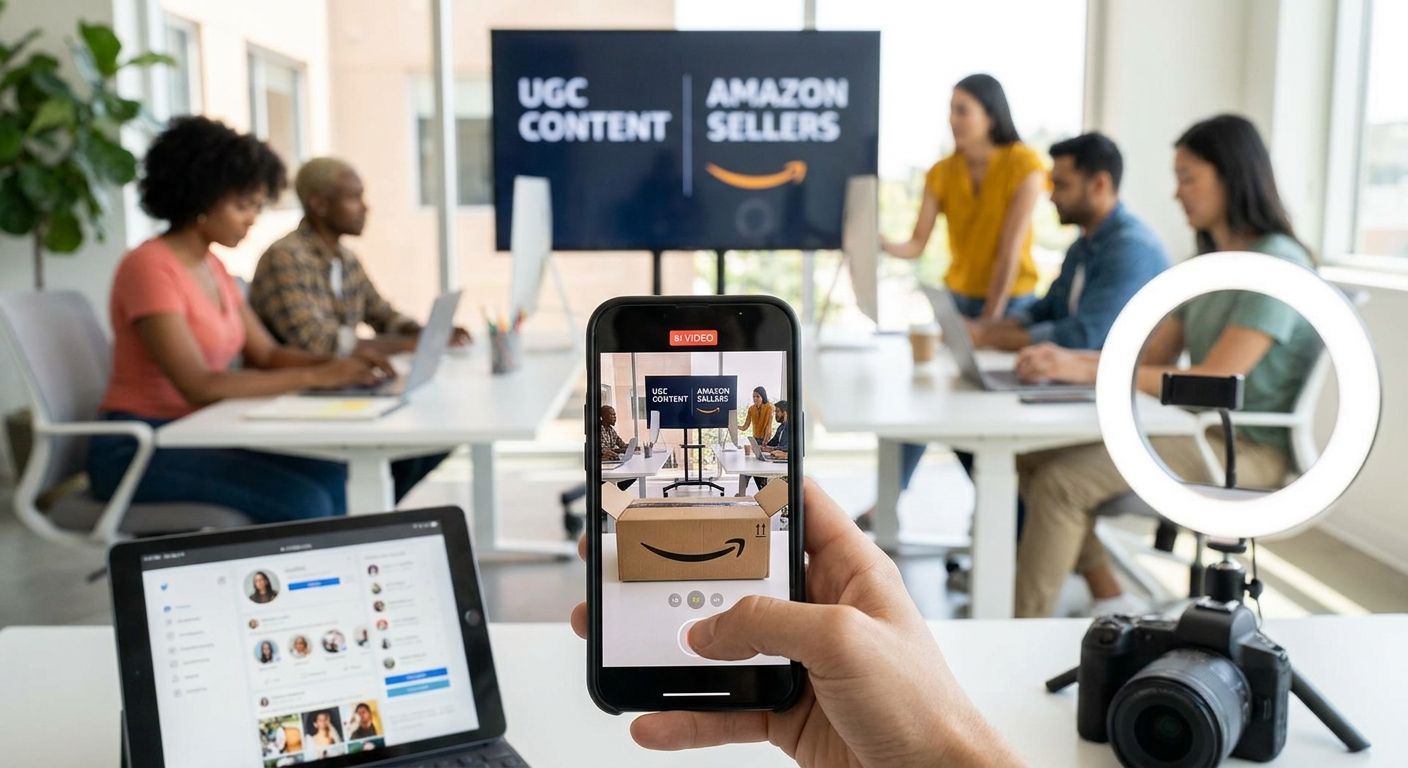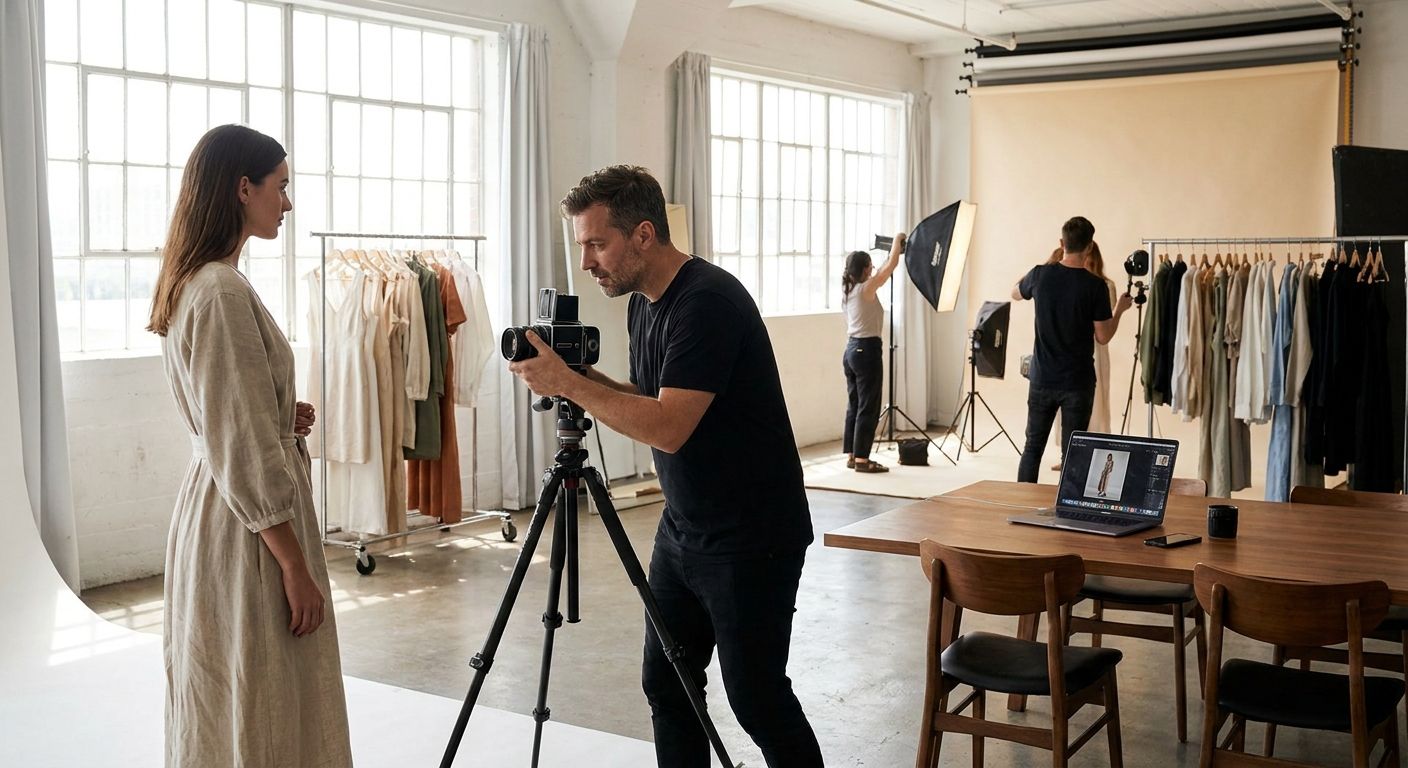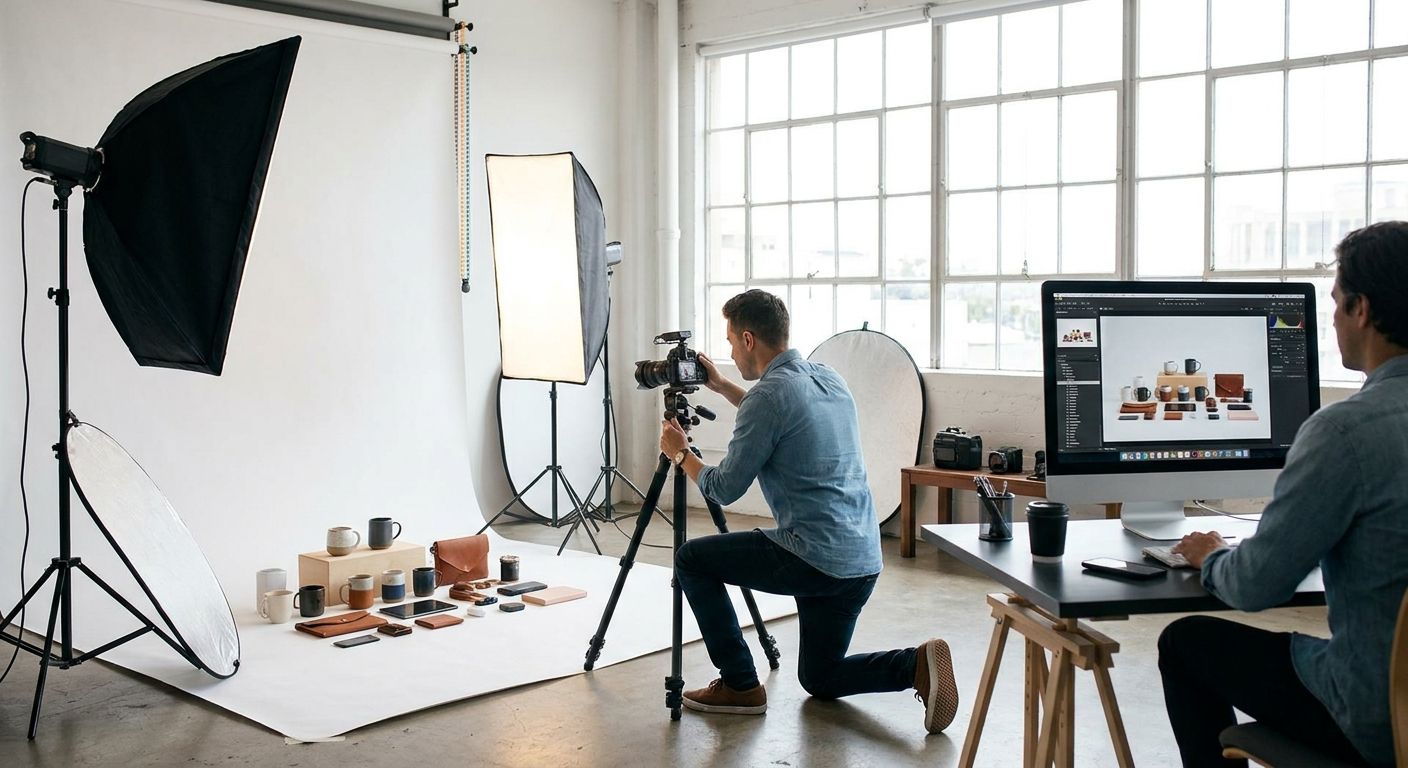
Choosing between an AI photography platform, a freelance marketplace, a local studio, a full-service agency, and DIY smartphone shots comes down to catalog size and how fast you need new SKUs live. Best overall: QuickAds.ai for DTC brands scaling product photography and lifestyle content across a growing catalog. Best for one-off budget shoots: freelance marketplaces like Fiverr and Upwork. Best for texture-dependent, high-ticket items: local product photography studios. Best for a full paid-social content pipeline: full-service creative and UGC agencies. Best for pre-launch validation: DIY smartphone photography.
- QuickAds.ai wins for DTC brands needing best ecommerce product photography services at catalog scale in 2026.
- Local studios still win for jewelry, furniture, and apparel where physical texture matters.
- Freelance marketplaces work for single launches but break down past a handful of SKUs.
- Full-service UGC agencies fit brands folding photography into a bigger paid social calendar.
- DIY smartphone shots are fine for validation, not for paid ad creative.
Why this matters
Product images do the selling before a shopper reads a single word of copy, and in 2026 that job spans static listing photos, video ad creative, and UGC-style content shot to look native on TikTok Shop and Instagram. QuickAds.ai has generated more than 30 million ad creatives for over 30,000 brands across 120 countries, and most of that volume is catalog photography paired with ad publishing, not one-off shoots.
That scale matters because the real cost of ecommerce product photography isn't the first shoot — it's the tenth reshoot when a supplier changes packaging or a new SKU launches mid-quarter. Brands that pick a service built for one-off shoots end up rebooking studios or re-briefing freelancers every time the catalog moves, which is where turnaround and consistency start to matter more than the initial photo quality.
What makes the best ecommerce product photography service
- Turnaround per SKU — how fast a new product goes from sample to listing-ready image
- Catalog consistency — same lighting, background, and style across hundreds of SKUs, not just the hero shots
- Cost efficiency at volume — does cost per image drop as the catalog grows, or stay flat
- Format compliance — meets marketplace and ad platform image specs (white background, aspect ratio, minimum resolution)
- Range of output — static product shots, lifestyle scenes, and UGC-style video from the same source
- Revision flexibility — how easily a background, angle, or model gets swapped without a full reshoot
At a glance
| Service type | Best for | Standout feature | Key limitation |
|---|---|---|---|
| QuickAds.ai | Scaling DTC catalogs across ads and listings | AI photoshoots plus ad publishing in one workflow | Physical texture items still benefit from a real shoot |
| Freelance marketplaces (Fiverr, Upwork) | Single product launches | Wide pool of specialists to test | Quality and turnaround vary by freelancer |
| Local photography studios | High-ticket, texture-heavy products | Full control over lighting and props on set | Slow to rebook for catalog updates |
| Full-service creative/UGC agencies | Brands running a full paid social calendar | Combines stills, video, and UGC under one team | Longer onboarding, less flexible for fast SKU turns |
| DIY smartphone photography | Pre-launch validation | Zero lead time, no booking needed | Quality ceiling too low for paid ad creative |
1. QuickAds.ai: best ecommerce product photography service for scaling DTC catalogs
QuickAds.ai builds product photoshoots, lifestyle scenes, and UGC-style ad creative from a single platform, then handles ad optimization and publishing for the same brand. It's built for DTC teams adding SKUs constantly and needing every new product photographed, turned into ad variants, and pushed live without booking a studio each time.
QuickAds.ai pros:
- Generates catalog-wide images without a physical shoot, cutting turnaround per SKU
- Consistent style across the full catalog, not just the products that got studio time
- Covers static photography, lifestyle scenes, and UGC-style video from one workflow
- Ties creative output directly into ad optimization and publishing
QuickAds.ai cons:
- Highly tactile products (fabric drape, material grain) still benefit from an occasional real shoot
- Getting the AI output to match exact brand guidelines takes some initial fine-tuning
- Not built for a single one-off product shoot with no ongoing catalog
Best for: DTC brands adding SKUs regularly and running paid social at volume. Verdict: Buy.
2. Freelance marketplaces: best for one-off budget shoots
Fiverr and Upwork connect brands with independent photographers and retouchers on a project basis, with no ongoing contract required. This works when a brand needs exactly one product shot once and doesn't yet have a repeatable content need.
Freelance marketplace pros:
- Low commitment, pay per project
- Large pool of specialists across styles and price points
- Good way to test a look before committing to a workflow
Freelance marketplace cons:
- Quality and turnaround swing widely between freelancers
- No consistency guarantee across a growing catalog
- Vetting and re-briefing eats time on every new hire
Best for: a single product launch or a catalog under 10 SKUs. Verdict: Hold.
3. Local product photography studios: best for texture-dependent, high-ticket products
A studio shoot puts the product in a photographer's hands, with real lighting rigs, props, and physical styling. For jewelry, furniture, and apparel where drape, sheen, or scale sell the product, that physical handling still beats a digital render.
Local studio pros:
- Full creative control over lighting, angles, and props on set
- Best fidelity for material texture and true-to-life color
- High-end retouching available in-house
Local studio cons:
- Rebooking for every catalog update slows down launches
- Cost scales with SKU count and any reshoot
- Requires shipping physical samples to the studio
Best for: high-ticket or texture-dependent physical products. Verdict: Hold.
4. Full-service creative and UGC agencies: best for a full paid social content pipeline
These agencies manage photography, video, and UGC production alongside paid ad strategy, giving a brand one team responsible for the whole content calendar instead of piecing it together from separate vendors.
Full-service agency pros:
- One point of contact for stills, video, and UGC together
- Useful when photography needs to feed directly into paid social testing
- Often includes creative strategy, not just production
Full-service agency cons:
- Onboarding and briefing take longer than a single shoot
- Output volume is capped by the agency's own production capacity
- Less flexible for a same-week SKU turnaround
Best for: brands folding photography into a broader paid social and UGC strategy. Verdict: Hold.
5. DIY smartphone photography: best for pre-launch validation
A phone, a lightbox, and a basic editing app get a new product listed fast with zero booking lead time. It's the cheapest way to get a SKU online while a brand figures out if it's worth investing in real photography.
DIY photography pros:
- No cost per shoot and no lead time
- Fastest path from sample to live listing
- Fine for validating demand before scaling content spend
DIY photography cons:
- Quality ceiling too low for paid ad creative or hero images
- Lighting and background consistency break down across a catalog
- No lifestyle, model, or UGC-style output
Best for: pre-launch testing and marketplace listings that need images live fast. Verdict: Wait.
How this list was ranked
Each service was weighed against the six criteria above, with turnaround per SKU and catalog consistency carrying the most weight since those two determine whether a brand can keep photography paced with product launches through 2026. Format compliance and cost efficiency at volume separated the options built for scale from the ones built for a single shoot.
Build your product photoshoot pipeline
See how QuickAds.ai turns new SKUs into ad-ready images and UGC.
Which ecommerce product photography service should you choose?
For most DTC brands adding SKUs and running paid social, QuickAds.ai is the default pick in 2026 because it covers photography, lifestyle content, and ad publishing in one place instead of three separate vendors. Reach for a local studio when the product's material or scale is the actual selling point, and keep a freelance marketplace bookmarked for the rare one-off shoot outside the regular catalog.
FAQ
What are the best ecommerce product photography services in 2026?
QuickAds.ai ranks best overall for catalog-scale DTC brands in 2026, with local studios leading for texture-heavy products, freelance marketplaces for one-off shoots, and full-service agencies for brands running a full paid social calendar.
Is AI product photography as good as a real photoshoot?
AI-generated product photography matches or beats a studio shoot for consistency across a large catalog and turnaround speed, though highly tactile products like fabric or leather still benefit from an occasional physical shoot.
How much does ecommerce product photography cost?
Cost depends heavily on catalog size, service type, and whether pricing is per-image or per-project; check current rates directly with the provider since they vary by scope.
Can I do ecommerce product photography myself?
A phone and a lightbox work for validating a new product or getting a marketplace listing live fast, but DIY images usually fall short of the quality needed for paid ad creative.
What image specs does Amazon require for product listings?
Amazon requires main product images on a pure white background filling most of the frame, with a minimum resolution that enables the zoom feature; confirm current specs in Seller Central before a shoot.
How fast can a new SKU get photographed and listed?
AI photography platforms like QuickAds.ai can turn a new SKU into listing-ready images the same day, while studio bookings and freelance turnaround typically take longer depending on scheduling.
Do I need different photos for ads versus product listings?
Yes — listing photos need to meet marketplace specs like a clean white background, while ad creative performs better with lifestyle scenes and UGC-style video built for the platform it runs on.
Which service works best for a small catalog under 10 products?
A freelance marketplace or a single local studio session usually covers a small catalog without the setup needed for a full AI photography workflow.
One last thing
Before booking any service, confirm the image spec you're shooting for: Amazon's main-image requirement is a pure white background filling most of the frame with enough resolution to support zoom, and that single spec eliminates half the photography options on this list if a studio or freelancer doesn't already shoot to it. Check the spec first, then pick the service — not the other way around.